
Women who revolutionized the era by seeding an evolution for gender roles in math and science
Authors: Valentina Belo, Ana Júlia Franco and Carlos D’Oliveira
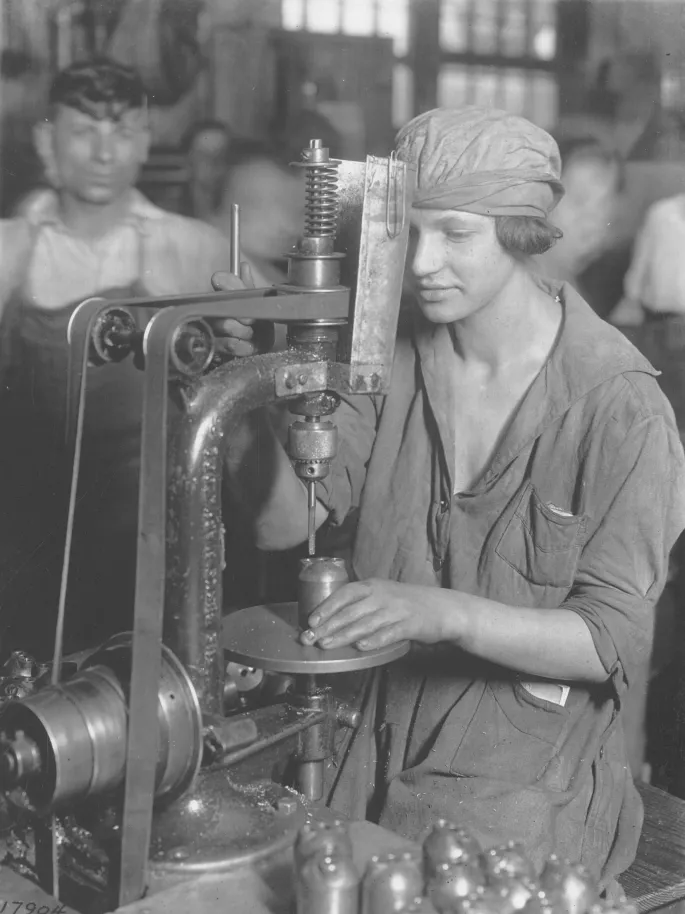
The 19th and 20th centuries saw good advances in educational and scientific opportunities for girls. In the 1800s, women helped to seed a revolution in gender roles by working under the sheets. For many, women “broke the rules” by doing that. Though, it is a right that women have been fighting to gain for too long.
Picture this: you are a little girl in a world where “people like you” – women – are denied education, the right to vote, the right to expression, the right to freedom, and they were expected to work at home, obeying their husbands and watching their freedom fly away from them. That is the life of many women in the 19th and 20th centuries. They had to work hard to demand their rights: education, voting, freedom, working at what they wanted… These women were stubborn, dedicated and courageous to do what they wanted to do, and not what they were expected to do. Everyone can relate to what it’s like to have a dream and deal with those who might stand in our way. In the end, it was not only about some people getting in the women’s way while others encouraged them, but about overcoming barriers imposed by society.
Grasping Mysteries: Girls Who Loved Math by Jeannine Atkins is a collection of seven stories of many courageous women in science and math and how they revolutionized history. Special attention to Caroline Herschel’s story, that is set around 1820 when women were still battling for their rights. Caroline ends up being the first woman to discover a comet and earn a salary for scientific research.
In The Skylarks War by Hilary McKay, we are introduced to Clarissa and her older brother Peter, who faced the conflict of The First World War since her cousin is in it. She writes letters to her cousin Rupert, who is in France, to support him. Concurrently, women began to be useful in men’s eyes because of the war doing things like nursing, patrolling or planting and more. Plus, she needed to comfort her brother Peter who had issues with her father.
In Ellen Klages’ story White Sands, Red Menace, the book may have this name because Mr.Gordon works in the missile range base called white sands. Suze Gordon’s parents are the scientists that helped to make the atomic bomb that ends the Second World War, even though Mrs. Gordon is in the movement against the atomic bomb, he helped to build, but he is afraid of what that it can cause. And where does an adopted girl that likes physics and math fit in this period? Nowhere. People like her need lots of dedication and perseverance because this world won’t make it easy for them.
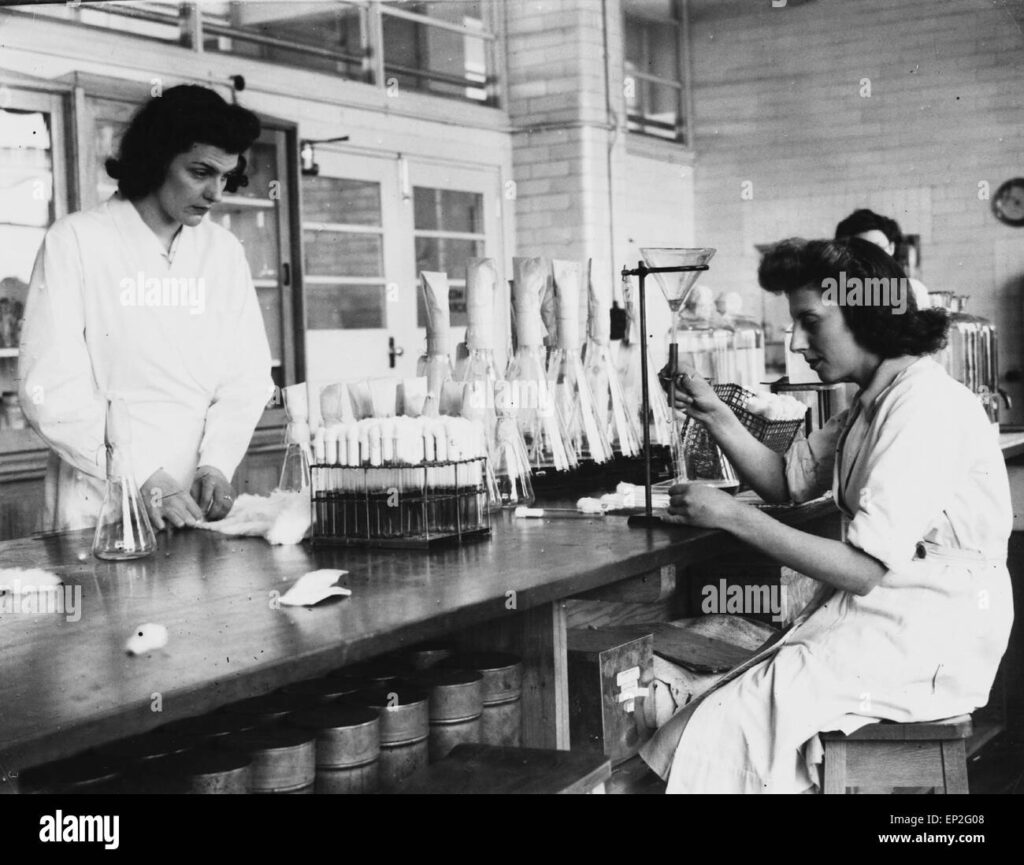
Female, strong, and smart
Many women used math and science to cause extensive social change. Herschel was the first woman to spot a comet and receive a salary for it; Florence Nightingale reformed hospitals working as a nurse in the 1st World War and making several charts comparing death rates; Hertha Marks Ayrton was the first woman engineer; Marie Tharp strongly helped to create a map of the whole ocean floor; Katherine Jonhson worked at many NASA projects; Vera Rubin found evidence for the theory of dark matter. Amongst many other women, they found a way to restructure their era for gender roles. These women didn’t go with the crowd. These women used math, science and everything in their reach to conquer what was theirs by right, that was taken from them just because they were born female, and, consequently, this fight for equality and freedom improved the world we know today – which still must see a lot of change.
In our reality, women were denied the freedom to express themselves. There was no option, they had to stay home and watch after the households and take care of their houses. If they wanted to do something more, they would be treated like freaks. Some people got discontent with that and begged for a revolution; others, though, acted like that was normal, which is not. Imagine if it was the contrary. Imagine if men were denied education and their rights in general and lived in a world where only women would rule. Surely they wouldn’t like that. however, when it’s the contrary, “it’s something normal”. People of the century treated that like a normal thing that happens. Yet, it is not at all something normal. That’s why books like Grasping Mysteries were written, to argue that that’s not a typical, habitual, ordinary thing that happens and that this situation is not OK.
Female figures were expected to act like not having the rational skills to make a decision. Or they were meant to act like the standard type of women, staying at home taking care of the house or their children. They were expected to remain subservient to their husbands, who could work in diverse stuff, who could take charge of their rights, who didn’t have to work under the sheets just like many women in the century had to do to fight inequality.
Proving society wrong, women who stood up shook a whole concept that was implied by society. However, this concept isn’t as new as we thought. According to Gerda Lerner’s research in the early 1990s, gender inequality was already nearby in the second century BCE. She figured that valuing men over women isn’t something recent, but something exceedingly old, even before written records came to light. Men were over-represented in cave art, they were buried in an abundant amount in comparison to women and children, according to Lerner. That would mean that women and children didn’t get a formal burial just like men did. The archaeologists from the University of Seville, Marta Cintas-Peña and Leonardo García Sanjuán, agreed that this segregation and superiority of genders is something cultural, and not something biologically impaled. That is, this division of genders is something that our society inferred as common and we weren’t biologically born like that. Even though many people came up with a thesis for when, why and who actually started with this segregation of genders, we can only imagine the answers.
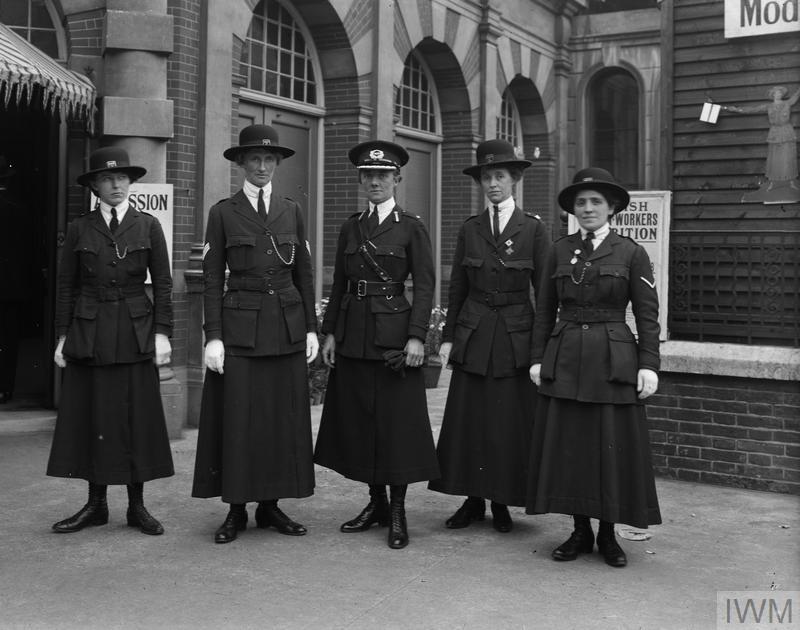
Confronting face-to-face gender inequality
Caroline Herschel was a stubborn and dedicated woman who proved society wrong. She’s a German girl who was discontent with the rules implied by society. She was denied education in her childhood and she has to battle with the 1820s society to be the first woman to discover a comet and the first woman to earn a salary for scientific research. She was denied education, denied working at the military band, since any woman can work in it, and, as the majority of women, she was told what to do and what not to do as a lady. She was always someone who envisioned the sky as a window of possibilities and she always imagined what was to be the first person to spot a comet. She worked “under the sheets” to get to know the sky closely. She had to hide from everyone while showing her passion for the sky. We are even given the terrific sentence in Grasping Mysteries, “Caroline became the first woman given a salary for scientific research. Shouldn’t bells ring, trumpets blare, and dancers twirl in the street? The world is quiet” (p. 35). It shows us that even though a big step into a world with less inequality is taken, the 1820s society is quiet, they’re silent. Society is not cheering for what they conquered, they’re not cheering for overcoming another barrier for its evolution, on the contrary, they’re inaudible, they’re still. This piece of evidence shows that the inequality existing in our society is still here. Caroline is speechless and stupefied with that, quite rightly.
Adding to that, people like Hershel don’t like to be held back, “Caroline doesn’t want to be beholden or go back to washing clothes.” (p. 34). That is due to the fact that all women did housework like washing and putting away dishes, sweeping the floor, doing the laundry, cooking… Nevertheless, Caroline didn’t want that. She wanted to satisfy her right of freedom, which society took from her in an unfair way since the right of expression, of freedom, of choosing freely an occupation and others are in many Constitutions such as the American and Indian one. “Congress shall make no law… abridging the freedom of speech,” according to the First Amendment from the U.S. Constitution. The bill of rights of the U.S. Constitution guarantees for people the right of personal autonomy. That is, a citizen can make decisions regarding his personal life, like choosing a job for example, and the government or any other can make its business. Because “all citizens have the right to freedom of speech and expression,” according to article 19 (1)(a) of The Indian Constitution. Sadly, people started to believe that only men had these rights. Maybe because men are more represented. Some use the argument that Jesus was a man. Some use the argument that Eve was the one who bit the apple and we wouldn’t be here, in a precarious world like this one, if it wasn’t for her. This is utterly senseless. According to a post named “10 REASONS MEN ARE BETTER THAN WOMEN” published by the Goodwin Smith, “men are much better in every way”. Also, it is used as an argument that men are better than women that “men can drive”, implying that women can’t. It is said “Men use their rear view mirror to check their surrounding; women use them to apply lipstick.” Men may think that’s only a joke, however, for women, it is their lives, their rights. Even though gender equality is written in almost every human rights treaty and we have made a lot of progress in comparison to centuries ago, many women still suffer from discrimination.
Now imagine another situation: you were a child born in the 19’s and you were raised to have the etiquette of a girlish posture that is needed to have. But suddenly when you grew up, women began to be more “useful” or more than just an “object” that men could purchase. You could fight as a nurse helping your state by healing injured soldiers. In the end, that was the scenario chosen for The Skylarks War where women didn’t have as much education as men did. Most times, women’s fate was to marry a man and care for the house and the children – because they had to have a child. It seems more that women were “objects,” which was apparently normal at that time. Clarissa growing up in the 20th century was a little hard because she was ahead of her time. But like most women in the 19th century they were to remain subservient to their father and husband, Clarry didn’t have much to do in the beginning. But as she got older, her voice began to get louder and louder, copering back then when she was just a child.
On the topic of getting louder, Dewey is a great example of that. Imagine that your parents and your best friend’s are the scientists that helped to build the atomic bomb that ends the war, and your dad dies in an accident in the laboratory, so the family of your best friend took you in. This is Dewey’s reality. Dewey has problems with a woman from her past, her biological mother. She was mocked many times in her life because one leg is longer than the other. That is because her mother dropped her when she was just a baby and her leg broke in three different places. The mother ran away in fear. Then, her father died in the war. Also, Dewey is a more homely woman that doesn’t have a good profession. but this story is different from what happened back then, Dewey doesn’t want to be one more in the crowd, she is different, she wants to do engineering courses. She was confronted many times because in this period women have many difficulties, in the curse she wants girls don’t have many spaces. Women in the US and in many parts of the world at that time they were like a mere object of procreation considered the property of men, to whom they owed obedience and subordination.
Prejudice in the 19th century
In the events of The Skylarks War, Clarry is in her grandparent’s house where she begins to face prejudice and self-esteem. As said before, women didn’t have as easy a life going as men did, in everything, women didn’t go much in school. They would stay at home and remain with their father and husband, which in this case it would be her absent father who rarely appeared at home. Clarry did face prejudice because she was a woman who simply wanted to swim in the lake with her brother Peter and her cousin Rupert and all that judgment because she was acting “manly” and independent. This is an example of how women were judged and how they need to act girly because a single act of a boy or an act of independence, women would be judged.
However, women in the First World War were quite revolutionary, because they had an important role as nurses, doctors and even ambulance drivers. if they weren’t on the battlefield as nurses, they would be at home working in agricultural positions in their gardens. Apart from that, there were some brave women who worked in an industrial workforce building bombs for the American army. Since women were treated as an “object” before the events of the war, it was quite a revolution for woman and humanity. Thanks to brave women like Lucretia Mott, Sussan B. Anthony, Alice Paul, Elisabeth Cady Stamon and many more, who were part of this evolution. These women were warriors fighting for equal rights, the right of voting like any human being should have. Clarry has a very loud voice and she says what she wants when confronting people.However she was also very caring for her cousin and family. However people would still have prejudice, but that’s why they fight for it. More than one hundred years ago, in the time of gas lamps and candlelight, women fought for their rights and even after hundred years, we still fight for them.
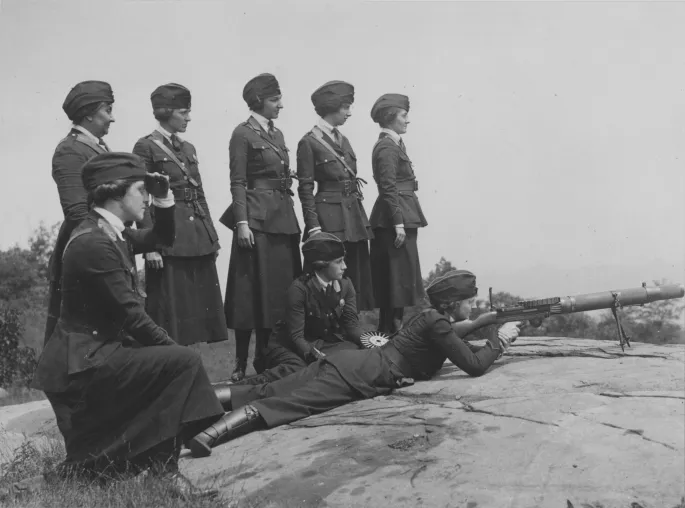
Fighting like a girl
Determination, dedication, fierceness, stubbornness, and hard-work are equivalent to any weapon men use. They are equally important. When Atkins writes in Grasping Mysteries, “It’s time I’m paid for my astronomical work. The king gives you a salary, William, I want one too,” (p.34) she highlights that even though Caroline Hershel knew that there were not many (or any) women in science, she wanted to earn money for her work just like any man in science. She was determined to get a salary like the male scientists. This piece is highly significant because it shows how women disagreed with the time. Women were unable to fulfill their rights. They had to fight for something that should have been theirs all along. It shouldn’t have been like this.
It should be noted that Sherry Suyu, astronomer and teacher at the Technical University of Munich, when interviewed by MPG (Max-Planck-Gesellschaft), said something very interesting about Hershel’s impact on the 1820s society. Suyu observed “[Hershel] encountered many obstacles on her path to becoming an accomplished astronomer, yet she persevered. She had quite a difficult childhood. As a child she suffered from smallpox, which left her scarred and later also from typhus, so her growth was stunted. In her family, she was expected to do household duties and remain within the domestic sphere.” That is, even with a tough childhood, encountering many disadvantages along the way, being told to run the household and what not to do as a lady, doing chores all day long like a maid in her own house, Caroline didn’t give up. This is a typical action of who knows what they want. She was restricted from many things like formal education during her childhood; nonetheless, she stood still and kept looking forward to what she wanted.
Adding to that, Atkins wrote on her site Jeannine Atkins, “I loved learning about the courage, friendships, and families of these girls who show how scientific goals move forward when people work together.” This is a reflection of everything she wants to pass on to her books. Readers can learn from Atkins and these stories that what may look small is truly grand. Even though these terrific women are smaller than men, or less physically strong or tall, it doesn’t mean they can’t do the same. They proved to us actually that they can do even better if they want to. They also showed that if you don’t stand up for yourself, no one will. You can’t just wait for a charming prince to come pick you up on a white horse and solve all of your problems. You have to solve it by yourself. When powerful women rise, it causes other powerful women to rise. And that’s how it works. When people work together, instead of waiting for a solution that you could have found by your own hands or separating women and men, scientific goals move forward, our world moves forward, and we shape a better future.
Learning about the past through stories
The books Grasping Mysteries, The Skylarks War and Red Menace, White Sands offer us a window to the past since they involve us not only in that period, but also into that whole society. These stories attest to education being one of the most important and valuable sources of knowledge and power a woman can have. We can understand the present by thinking about the past. These stories are a great portrayal from long ago because they help us see that inequality was a massive problem at those times and it is still present in our society, even though we have been able to decrease it plenty. In 1876 Hertha Marks Ayrton was one of three women and 118 men to be in an electrical engineering course. Nowadays, women represent 44% of STEM workers in The USA, according to the Society of Women Engineers. Reading the stories of so many tremendous women we could identify that solutions will always be around for those who seek it, if we can work as a community, respecting each other. In Gina Carey’s words, “A strong woman looks a challenge dead in the eye and gives it a wink.”
Gina Carey:
“A strong woman looks a challenge dead in the eye and gives it a wink.”