How have wars in Asia affected the kids who lived there
Authors: Renata Galvêas, Juliana Oliveira and Arthur Alvarenga
Asia’s history has been marked by multiple events that affected the continent’s organization, local people’s lives and Asian countries’ interaction. Japan, China, Pakistan, India and other countries were strongly affected by continent-wide conflicts such as The Second Sino-Japanese War (1937-1945) and the Kashmir War (1947-1949), and by great wars such as the Second World War (1939-1945). A relevant but infrequently approached discussion topic is how these combats have strongly affected kids over the years, how their lives have changed and how the effects were irreparable.
The Second Sino-Japanese War began in 1937 when China began large-scale resistance to the expanding Japanese influence on its territory from 1931. Historians estimate that between December 13, 1937, and late January 1938, Japanese forces killed or wounded an estimated 40,000 to 300,000 Chinese (mostly civilians) in the “Nanjing Massacre” (also known as the “Rape of Nanjing”) after its fall. In China, this conflict was called the War of Resistance against Japan, only in 1972 did the normalization of Sino-Japanese relations occur.
The book The Taste of Rain by Monique Polak is a historical fiction narrative based on that conflict. The main character and narrator, Gwen, had been separated from her parents who were missionaries and they had to leave northern China to work elsewhere, likewise in the real life that many of these children develop a strong attachment to the memories of their country and some to their absent parents, and some of them eventually acquired Japanese nationality.
Gwen’s city was mostly destroyed; the only good part of town was where the Japanese were, she was one of 140 children who were enrolled in a boarding school in Chefoo, China when the Imperial Japanese Army invaded the country and, for two and a half years, she was treated as a prisoner while her country was destroyed. Just as a study that was presented in (Eajs 2021) shows that people who were born in a Sino-Japanese relationship have many problems with identities, feeling of belonging to a certain country, and having response to various policies that were adopted in different post-war periods.In the book, one of Chefoo’s teachers named Miss E. helped Gwen and the other children to live through the war, treating her and her friends as if they were part of a Girl Guides troop. The Girl Guides promise not only to stay positive in the most challenging situations, but also to make good decisions, meaning that they should always be kind to others without any hope of getting a reward in return. This code helped them get through the conflict, making these moments of difficulty more joyful. However in real life some children of Chinese mothers and Japanese fathers born during the war looked to Japan as their true homeland for a long time. These children faced extreme social and political adversities as well as persistent questions of self-identity as well as persistent questions of self-identity.
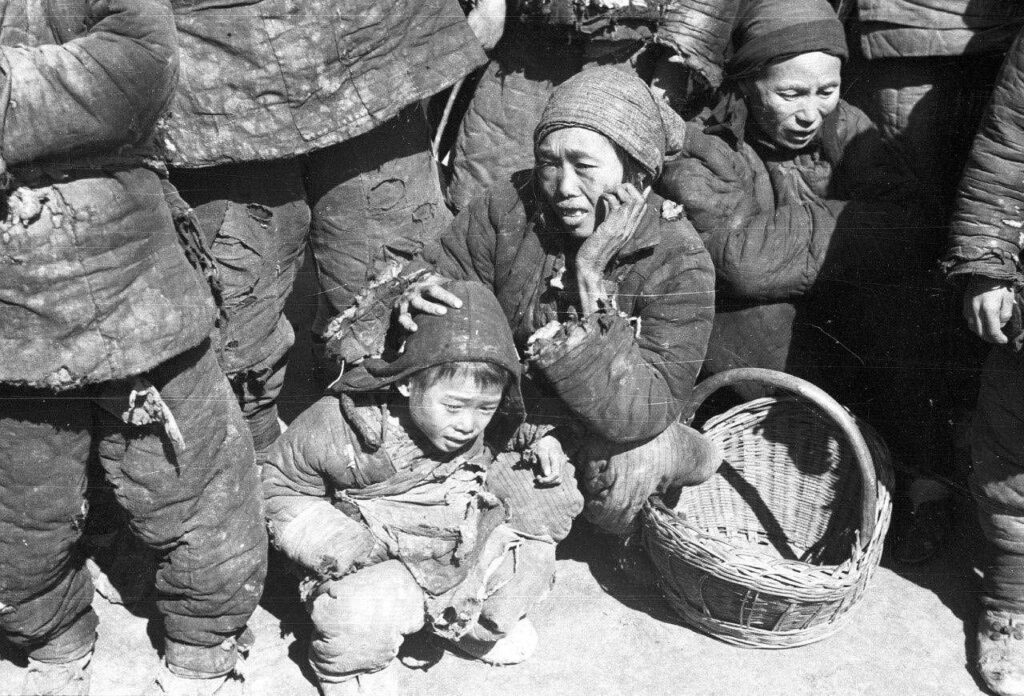
Besides internal conflicts, Asia has also been through external conflicts. Historians agree that the most harmful and bloody combat has been the Second World War, which was aggravated by some discontent towards The Treaty of Versailles following WWI, the economic depression across the world and the rise of Nazism. Since the Second Sino-Japanese War, countries like Japan and China had a conflicting relationship, as each one was supporting a different side in WW2. Every citizen had their lives disturbed in irretrievable ways, but how were kids, specifically, affected by this conflict?
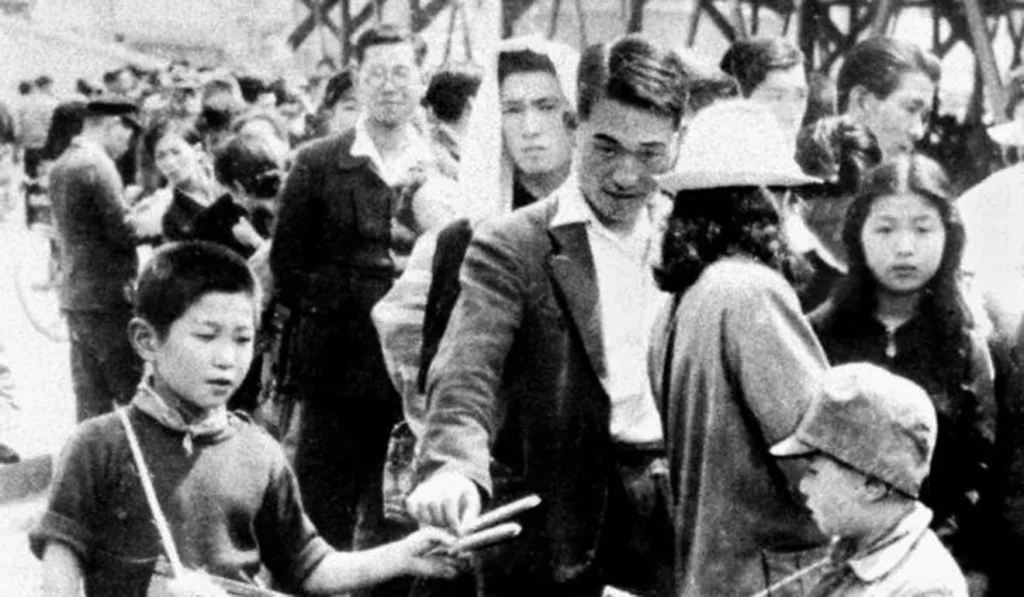
Imagine this: you are a Japanese kid during the war. Bomb alerts ring every single day at school. You see people around you going to war and never coming back, even though the Emperor says that Japan is winning. But you know it is not true. American CDs, hairstyles and clothes are being censored. And nobody really believes that something is going on. This is the situation of Yuriko-chan in the book The Last Cherry Blossom by Kathleen Burkinshaw. The book portrays World War 2 through the eyes of a kid in Hiroshima, 1944. A kid who is extensively sick of the war. A kid who realizes what is really happening and understands how they are not safe, not even at home.
Yuriko suffers with the war all throughout the book, even in small ways. The story starts by describing how it was to be at school while bomb alerts rang every day. It says that, after some time, kids got used to it, but not Yuriko. Every time a siren rang, the girl would hide under the chair and cover her ears until the sound was over, terrified of what could happen to her. In addition, Yuriko starts to realize how Japan is not winning when the remains of her neighbor Jiro-san come back after a couple of months of the war, or when Tokyo was bombed and she had to move to a house in the countryside. Also, it’s clear how Yuriko feels desperate and fearful because of the war when, on New Year’s Eve, the only thing she wishes for is peace.
The book title (The Last Cherry Blossom) is directly related to the theme of the text. When Yuriko has a deep conversation about Japan’s future with her dad, she asks him what would happen if they lost the war. Her papa answers that “I will keep my family safe at all costs… you are my life and I will give mine to save yours,” and she says she doesn’t want to be there without him. Then, papa finishes the conversation by mentioning a lesson, bringing up that this “is how life is, Yuriko-chan. In our lives, we must experience both beginnings as well as endings. It is like the season changing after the last cherry blossom falls.” At this moment it’s clear how the use of dialogue at that moment is essential to the understanding of how war affects different people in different ways. While Yuriko, as a kid, doesn’t want to even think about living without her dad, papa faces it differently: he sees life and death as part of a cycle. He uses a simile to compare the life cycle with the seasons changing, since it all brings new paths, opportunities and challenges.During war, kids experienced different situations that they had to adapt to in order to survive. As portrayed in The Last Cherry Blossom, kids’ daily routines had to be changed, since teaching children how to wear gas masks and implementing the ‘air raid drill’ into the school day became common. Even though these precautions shouldn’t be either experienced or of children’s concern, it was a necessity, not an option. To protect kids from bombings, air raid shelters were usually slept in by children. The not only physical but also mental harms it all has brought to those kids are unthinkable and irreparable. Gregory S. Johnson, a researcher from Otsuma University, Tokyo, Japan, says that “from the summer of 1944 to the autumn of 1945, Japan’s government evacuated over 400,000 urban primary school pupils. They were sent in the custody of their teachers to rural areas away from the increasing threat of air raids. The children lived and were schooled with classmates in Buddhist temples, inns, and other facilities. Officials couched the policy in terms of a training exercise, placating military and political opponents to the removal of children from their families. Furthermore, the government offered images of nurturing teachers as surrogate guardians to assuage parental concerns.” This shows how miserable the children’s conditions were and how the government was negligent because even though they said they just wanted to protect kids, the way they did it, by taking kids away from their parents and ignoring their reality after, showed that they didn’t really care.
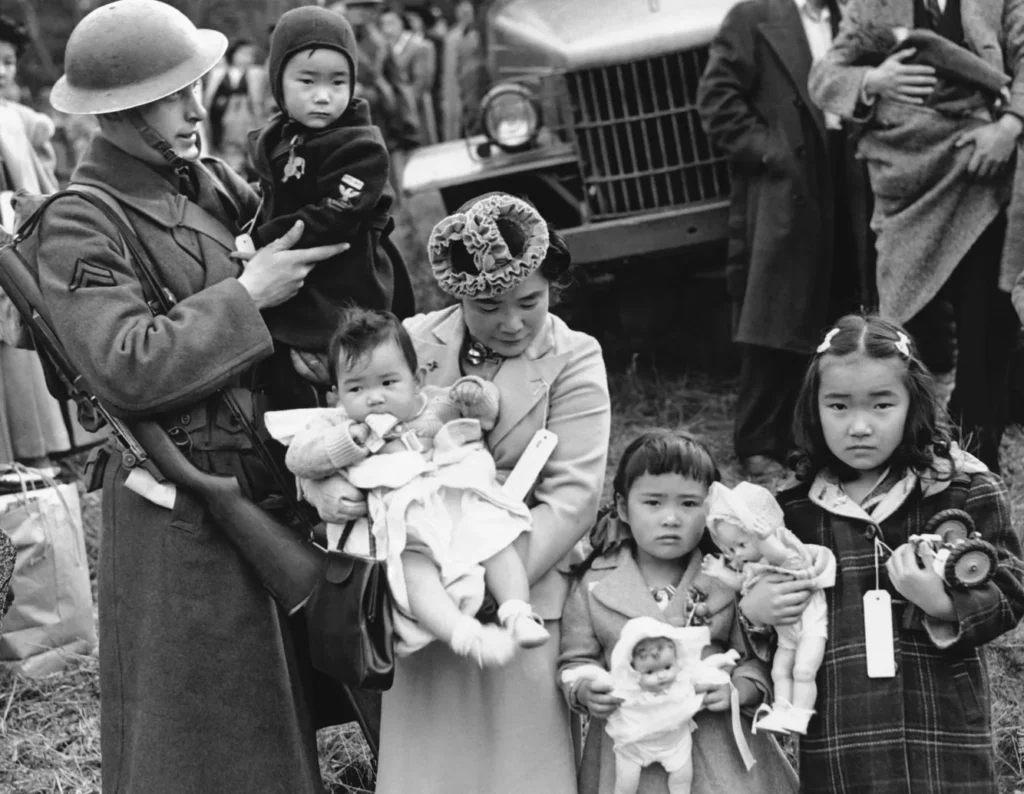
Samuel Yamashita, a Pomona College Professor of History, went deep on the topic and said “they were hungry, sick and poorly clothed and housed. They often were separated from their families and lost parents or siblings. Some lost their own lives.” He also mentioned the government’s negligence in this issue. The Young Post has also interviewed Japan’s Second World War orphans, who were kids at that time. They have reported that “for years, orphans in Japan were punished just for surviving the war. They were bullied. They were called trash and left to fend for themselves on the street. Police rounded them up and threw them in jail. They were sent to orphanages or sold for labor. They were abandoned by their government, abused, and discriminated against.” The harms of war were both mental and physical, and survivors who were kids at the time are still traumatized by these bloody and cruel conflicts that were not violent only to soldiers.
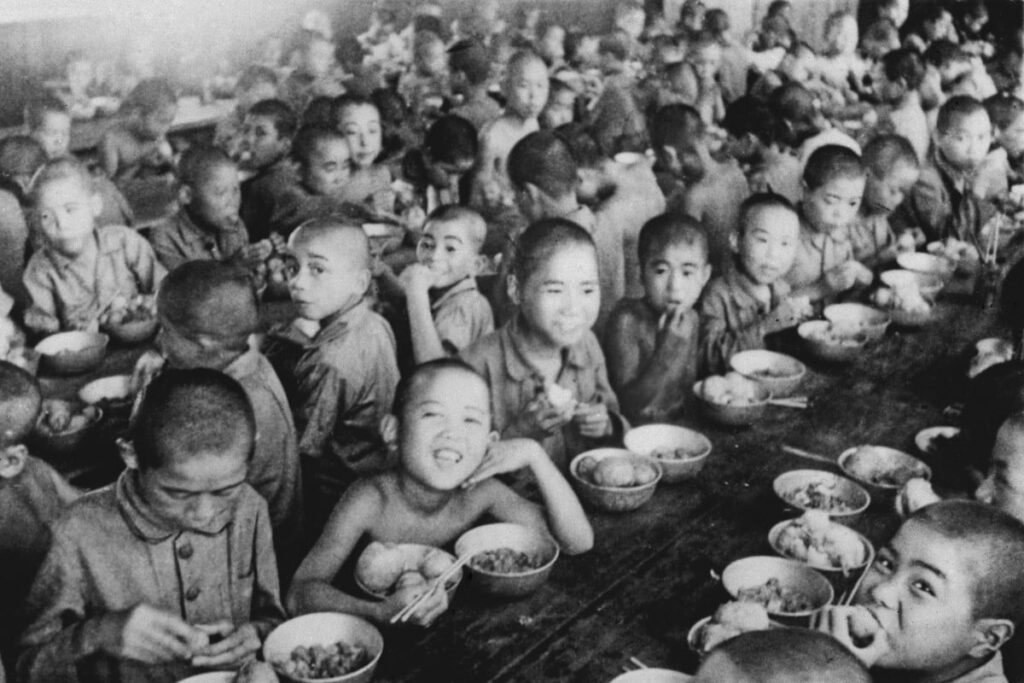
Studies have also shown that the Second World War still has an impact on the growth pattern of Japanese children nowadays. The nutritional shock of rationing, food shortages and other health problems that Japanese people faced at that time still have an effect on the height of Asian kids. “At adulthood, Japanese boys and girls were 3.0 and 1.7 cm shorter than they would have been if the war had never occurred. The war also led to a delay in the pubertal growth spurt of about 0.5 years and slower maturation of children,” says scientist Eric Schneider, a researcher from the London School of Economics & Political Science. The studies suggest that teenagers and children in late childhood were the most affected by these hazards war has brought. It’s clear how younger people were the most affected. Besides all the struggles they have faced and all the pain they’ve suffered, the difficulties imposed have somehow modified their DNA, being visible and prejudicial until now.
Another war that has marked the Asian continent is the First Kashmir War that began in 1947 and lasted until 1949, highlighting the impact of the division of the Indo-Pakistani territory. In this era the Pakistani and Indian interest about the Kashmir and Jammu estates increased for many reasons, such as water resources is available for human use, spanning the source of the Ganges and Indus rivers, the main rivers of India and Pakistan where some citizens of India’s cities perform Hindu rituals very significant to their religion, they believe that if you bathe in the waters of the river your soul will be purified by divine grace of Shiva and Ganga, gods. During this conflicting period, Hindu and Muslim people took advantage to further aggravate the disagreement they had, making firefights propitious. Besides all the direct conflicts, kidnapping of kids and teenagers were also happening with frequency in places next to the border between both Asian countries.
As globalization has taken over, more reports and evidence about war and conflicts, such as in the Asia region, have become much debated worldwide, making room for it within literature and cinema. In 2018, Veera Hiranandani published a book titled The Night Diary. The historical fiction book portrays many aspects of the Kashmir War, presenting some real facts, showing the reality of the old Indo-Pakistan population while creating a plot based on the fictional main character who is a girl named Nysha. She is just 12 years old and, to keep living in her house that is near the conflict zone, she has to deal with the constant worry of being attacked because of her family’s religion. In addition to the generalized context, the book also tells the kids’ perception about the war and how they suffer in this chaotic time, facing hunger and fear. The central theme of this book is identity added to religion and is observed as having the power to bring people together and also tear them apart. Although people have multiple identities, those ideas about who someone exists in a hierarchy where one identity is elevated above another.
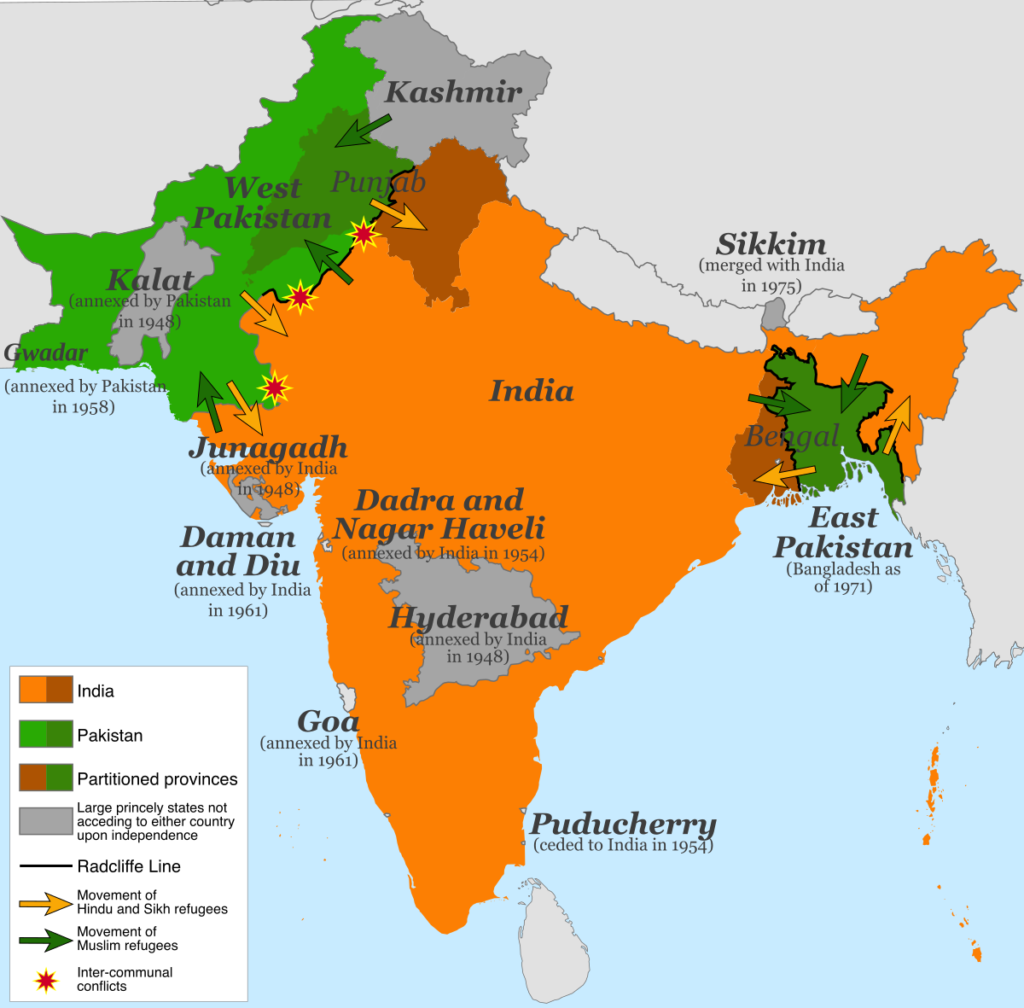
Currently, Kashmir has its share region between India, Pakistan and China. India, in which the more practice religion is Hinduism, controls the part of Kashmir where the majority of the population is Muslim and seeks territorial independence or integration with Pakistan, adept to Islam. Despite the concrete territorial division, there are still reports of invasions and illegal immigration between these countries and of kidnappings often involving childrens from countries with religion opposite to those of the kidnappers, making evident the permanence of the feud between the countries of former Indo-Pakistan.